Skip to product information
1 of 9

Lonely Are All the Bridges

Lonely Are All the Bridges

by Robin Hinsch

Regular price $60.00
Regular price Sale price $60.00
Sale Sold out
Tax included for domestic orders. Customs duty and import tax may apply to international orders.

Pre-order. Expected February 2026.

’Lonely Are All the Bridges’ is not a war book. Not exactly. It is a portrait of a place and its people—where systems have collapsed, where borders have been redrawn again and again.’ – Robin Hinsch

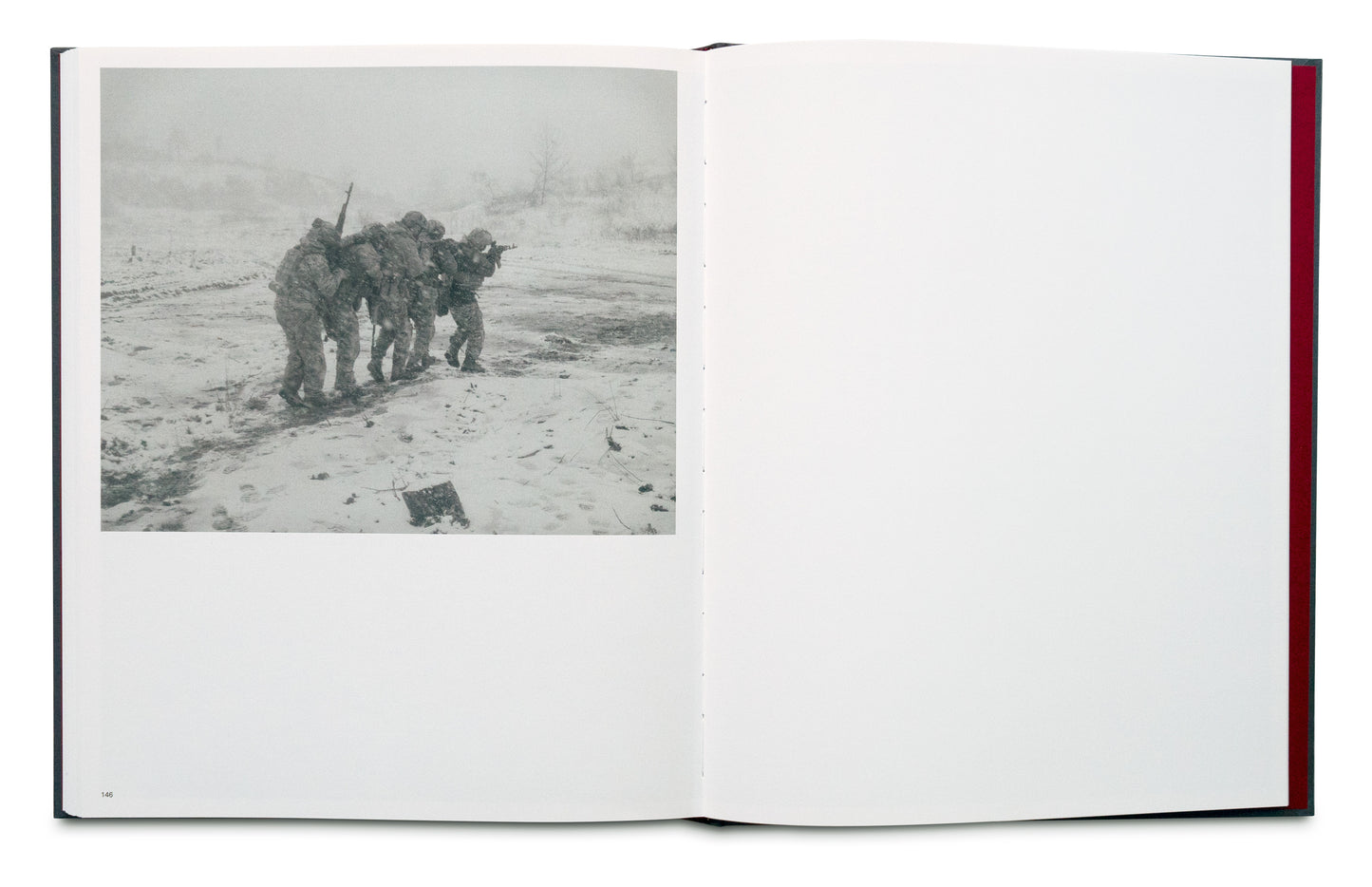
The images in Lonely Are All the Bridges were made in Ukraine by Robin Hinsch over a period of more than a decade. The photographer first visted Ukraine in 2010, intrigued by the description of the then President Viktor Yanukovych as ‘the new dictator between East and West’. His sustained interest in this complex country compelled him to return many times to photograph both the landscape and the people he encountered. His images are unlike pictures of Ukraine seen in the news, presenting instead a melancholic vision of country caught between a contested past, a brutal present and an uncertain future.  

More about this book

'This is not a story of heroes and villains. It’s about the slow, grinding forces that tear societies apart and the fragile, sometimes ambivalent human threads that try to hold them together.'

The photographs show Soviet ruins and historical monuments alongside misty, rain-soaked or snowy landscapes. The people in the pictures are carefully positioned within these environments—workplaces, homes, fields, ruins and battlefields. The images are both monochrome and colour, the latter subdued by a grey sky. This stylistic choice, in tandem with the presentation of the photographs in the book without captions alongside, hints that they are from a different yet indistinct era, and untethered from time.

Animals appear as a motif throughout the book—symbolising desertion and abandonment but also lending the book an allegorical and dreamlike quality. The bear, a symbol associated with Russia, is shown in an animal pacing around a zoo enclosure and also as a child in costume. Feral cats, dogs and wild horses slip in and out of the landscape and children are shown with dogs, horses and an incongruous camel. The bridge is another recurring motif linking back to the book’s title, drawn from a poem by Austrian Ingeborg Bachmann. This reflects on the nature of a bridge, a connection which is both tied to different sides and yet inherently isolated.

In his notes at the end of the book, Hinsch references Andrei Tarkovsky’s film Mirror which employs a fragmented narrative, dissolving linear storytelling, allowing various motifs such as memories, dreams, and experiences from different times to coexist. This approach is echoed in his image-making.  

'The book suggests, at least, a time in which the current war will be added to the strata of time and memory, and less starkly black-and-white thoughts and feelings may once again become possible’' Julian Stallabrass

Published February 2026
Essay by Julian Stallabrass
245 x 300mm
154pp, 76 images
Hardback
ISBN 978-1-80598-018-6

View full details
  • Robin Hinsch is an artist and photographer based in Berlin, Germany, whose work focuses on socio-economic and political issues, often combining photography with film collages and installation techniques. He has travelled widely and produced work in countries including China, India, Iraq, Liberia, Nigeria, Russia, Syria, Uganda, and Ukraine. His work has been widely published and exhibited nationally and internationally. He is the recipient of numerous awards, including the World Photography Awards, the International Photography Award, the European Photo Exhibition Award, the Georg Koppmann Prize, and the Willy Münzenberg Prize, and is an elected member of the German Photographic Academy and the German Photographic Society. Since 2024, he has been a professor of artistic photography at the University of Applied Sciences and Arts in Darmstadt.

  • 'This is not a story of heroes and villains. It’s about the slow, grinding forces that tear societies apart and the fragile, sometimes ambivalent human threads that try to hold them together.'

    - Robin Hinsch