Skip to product information
1 of 9

Las Pelilargas

Las Pelilargas

by Irina Werning

Regular price £45.00 GBP
Regular price Sale price £45.00 GBP
Sale Sold out
Tax included for domestic orders. Customs duty and import tax may apply to international orders.

Pre-order. Expected February 2026.

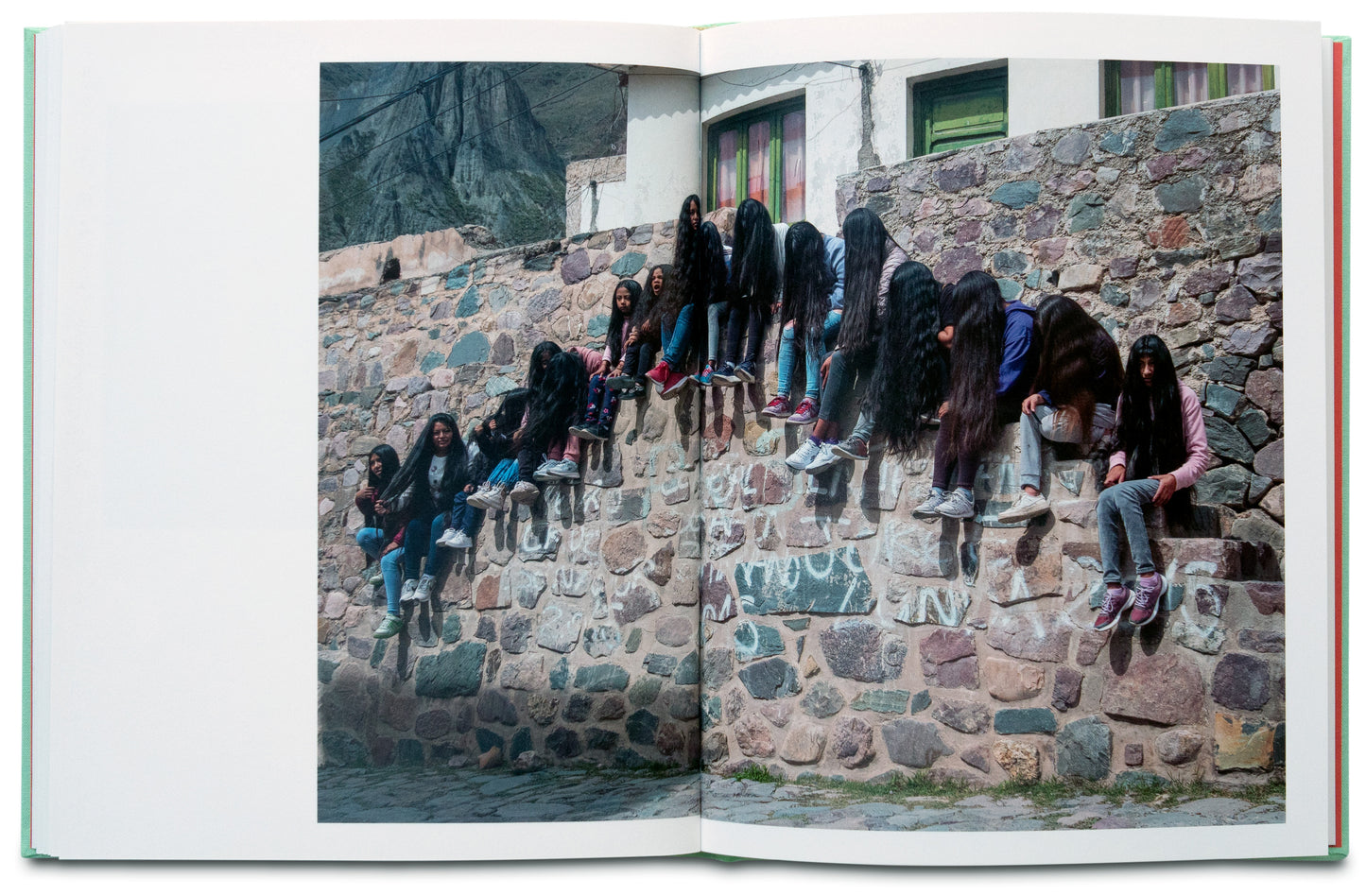
For 18 years photographer Irina Werning travelled across Latin America to seek out those with long hair to uncover and understand its cultural significance. Her forthcoming book Las Pelilargas (the long-haired ones) brings together this body of work in an exploration and celebration of identity and how the sacred is entwined in human hair.

More about this book

‘For many Indigenous communities, hair is a physical expression of thought—an extension of the self, much like the way rivers flow or plants grow from the earth. It reflects a deep spiritual connection to nature, rooted in reverence, humility, and reciprocity. Similar beliefs exist among Indigenous peoples worldwide, like Native Americans. What makes Latin America unique is how these Indigenous rituals and traditions have spread beyond their original communities. Ancient customs blend with waves of immigration, shaping a deeply hybrid identity. This project became an anthropological search, about where we come from, what we keep and how something sacred can hide in something as simple as hair.’

The book contains both black & white and colour photographs and in some photographs the subjects are pictured in the natural landscape amongst cacti or rocky outcrops. In others, those being photographed are playfully arranged by Werning in domestic environments, or surreal interventions. The colour photographs show the subtle differences in hair colour highlighting inherent individuality alongside conformity. Sometimes the hair is adorned with colourful accessories, sometimes it is still and sculptural, and others it is captured in movement.

Werning began this extensive body of work in 2006 in the Andes where she had been photographing the schools of Argentina’s Indigenous Kolla community. She encountered many women with exceptionally long hair, and intrigued, began to take their pictures and listened to their stories. Guided by her intuition she went on to spend months in remote mountain towns putting up signs in schools, hospitals and markets, and organising hair competitions in an effort to seek out those with long hair. She found that traditions were not just surviving, but evolving with long hair symbolising both continuity and subtle rebellion. In recent years she also began to make portraits of Indigenous Kichwa men living in Otavalo, Ecuador, where men and boys wear long braided hair to reclaim the tradition after a history of forced hair cutting during Spanish colonial rule. 

Published February 2026
195 x 250mm
128pp, 88 images
Hardback
ISBN 978-1-80598-016-2

View full details
  • Irina Werning is a freelance photojournalist based in Buenos Aires, Argentina. She has a BA in Economics, an MA in History (Buenos Aires) and an MA in photojournalism (London). She won the Ian Parry Scholarship in 2006, the Emerging Photographer Fund - Burn Magazine (Magnum Foundation) in 2012, and a first-place Sony World Photography Award for portraiture, 2012. Werning was chosen by Time Magazine as one of the nine Argentinian photographers you need to follow in 2015 and her book Back to the Future was chosen by Time Magazine as one of the best photobooks of 2014. In 2020, she was awarded the Emergency Covid Grant (National Geographic) and a Pulitzer Reporting Grant in 2021. In 2022 she won the World Press Photo Story category in South America. She is the winner of Eugene Smith grant 2023 and Leica International society women grant 2025.

  • ‘For many Indigenous communities, hair is a physical expression of thought—an extension of the self, much like the way rivers flow or plants grow from the earth. It reflects a deep spiritual connection to nature, rooted in reverence, humility, and reciprocity. Similar beliefs exist among Indigenous peoples worldwide, like Native Americans. What makes Latin America unique is how these Indigenous rituals and traditions have spread beyond their original communities. Ancient customs blend with waves of immigration, shaping a deeply hybrid identity. This project became an anthropological search, about where we come from, what we keep and how something sacred can hide in something as simple as hair.’

    - Irina Werning